A book review, (but Incy finds a poetry reference!)
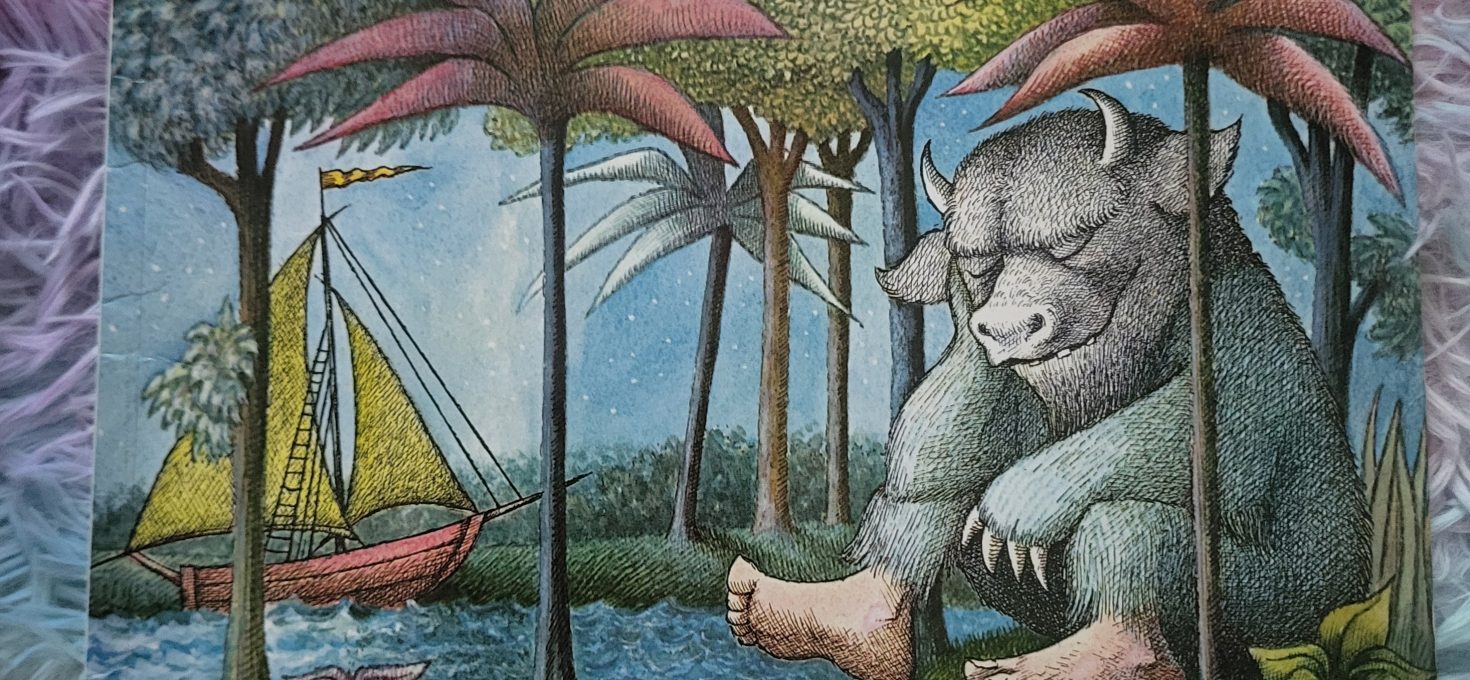
Illustrated and written by Maurice Sendak, Where the Wild Things Are has become a children’s classic. Max is a small boy whose unruly behaviour prompts his mother to send him to his room. Max uses his imagination to go to the place where the wild things are, and they make him their king.
The illustrations are wonderful and very expressive. The core message of love shines through – Max behaves badly, but his mother’s unconditional love doesn’t stop. Another is that children can never be caged when their imaginations can set them free.
Some readers say this book is one of wonder and adventure. Others have said it scared them as small children. Read it first to help you decide what’s best for your child.
Max’s journeying across the sea, eventually reaching home and finding his mother’s loyalty and love embodied in his warm meal, draws parallels with Greek mythology, namely Homer’s epic poem The Odyssey. Max could be Polyphemus, a savage whose name means “abounding in songs and legends”, which Max encapsulates as a “wild thing”. He transitions into Odysseus, realising he is not like the wild things after he meets them. Penelope, the wife of Polyphemus, remains loyal, waiting for Polyphemus, just as Max’s mother keeps his meal warm as he travels, after “weeks and months” of journeying by sea. Poetry like The Odyssey has inspired countless poems and stories since.
Even children can enjoy classic poetry like The Odyssey. Try reading The Odyssey by Usborne books, suitable for ages 7-9. Or try The Odyssey: The must-have illustrated edition of Homer’s Odyssey, for ages 9 and up, an award-winning book available to buy here: